When you look at images of Marrakech on Instagram, you will come across glamorous images of modelesque Instagrammers posing in front of colourful, quaint-looking shops of the city’s famed souk. These images make the souks look like paintings of a bygone era come to life. The expectation is that at a visit to the souks just off Jemaa el-Fnaa square you’ll enter Aladdin’s cave itself and find authentic fare, locally-handcrafted masterpieces, and a fascinating cultural experience.
The reality was really quite different.
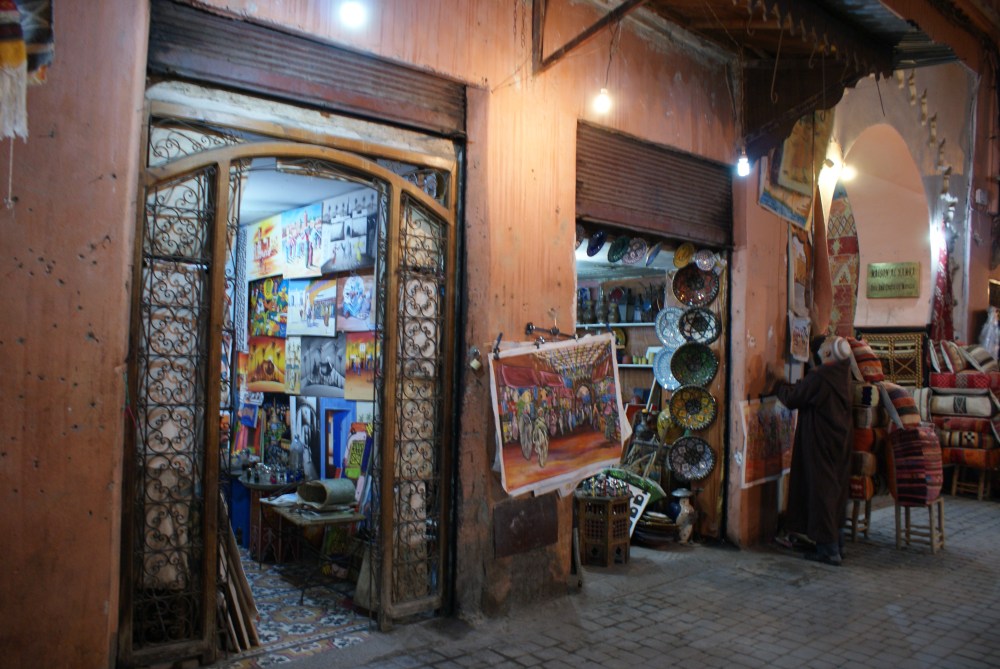
The souks of Marrakech have, unfortunately, become victim to globalisation and mass tourism. What was once an expression of the age-old tradition of trade, with locally-produced, handmade goods on display in the narrow but attractive labyrinthine alleys of the market, has now been all but devoured by the heavy-footed, insatiable monster of modern-day consumerism. Added to this is the issue of vulture of local gangs who operate a number of schemes to try to scam or rob tourists.
The world over, I have found that local bazaars and souks now tend to look the same. Venture through the markets of China, Bali, Thailand or even London’s Camden Market, and you will find similar goods being sold. These are mass produced and made to mimic local traditions. It’s easy to get fooled and increasingly difficult to understand what is authentic to a culture and what has been cheaply produced and imported over. You’ll find plenty of tourists in these markets, but not many locals. The few countries where you are still able to find locals shopping are often the ones that do not have much of a tourist industry, such as in Lahore. It’s not impossible to buy authentic goods in the markets of Marrakech – it’s just difficult, especially if you are unfamiliar with what those goods are (as most tourists usually are).
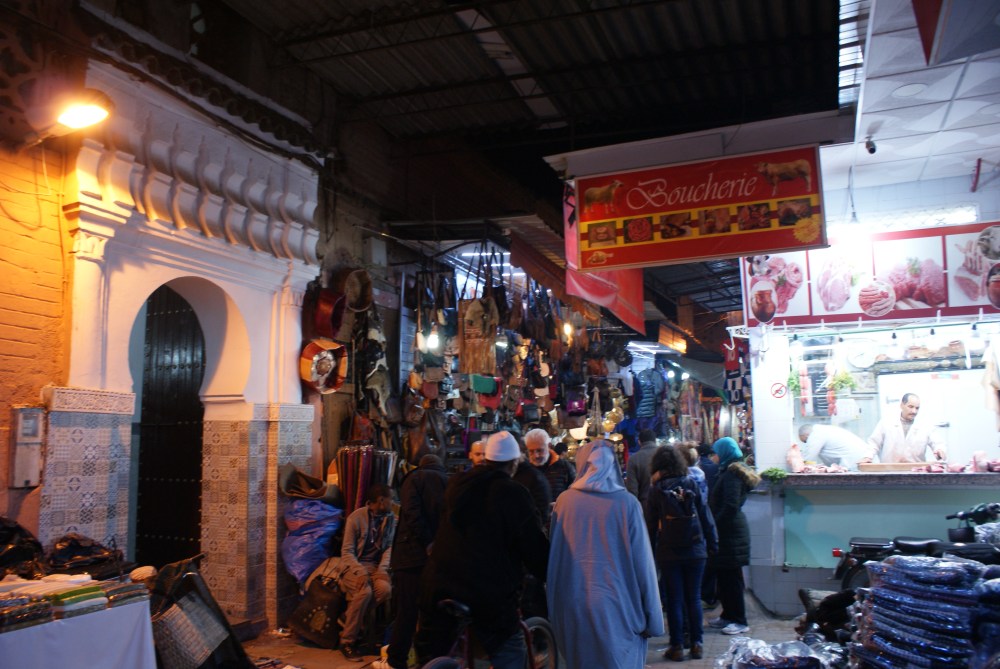
The souks were also incredibly busy, which made it very difficult to pose for a pretty picture (I have no idea how those Instagrammers manage it!). Some shops even charge you for taking a picture.
Trying to find authentic, high quality rugs – a difficult task
In Marrakech, there are also additional problems of not knowing what it is that you’re buying. Many shopkeepers are flouting so-called ‘vintage’ rugs, that are in fact cheaply produced rugs that have been deliberately aged, or will claim to be selling you pure silk when in fact it’s cotton.
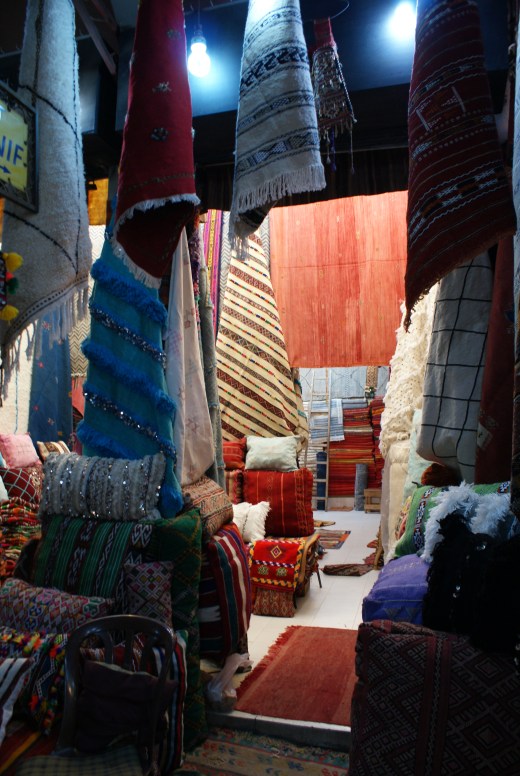
While the traditional Moroccan designs of these rugs are indeed stunning and it is so very tempting to buy one, my advice would be to be very cautious and potentially hold off on buying, unless you are familiar enough with rugs and their craftsmanship to be able to understand what it is that you are being sold. Misleading salesmanship and deception is very much widespread and you, the tourist, are a prime target. One way around this is to have a Moroccan local with you or someone who is familiar with the souks and the products that are being sold, so you can rely on them for guidance.
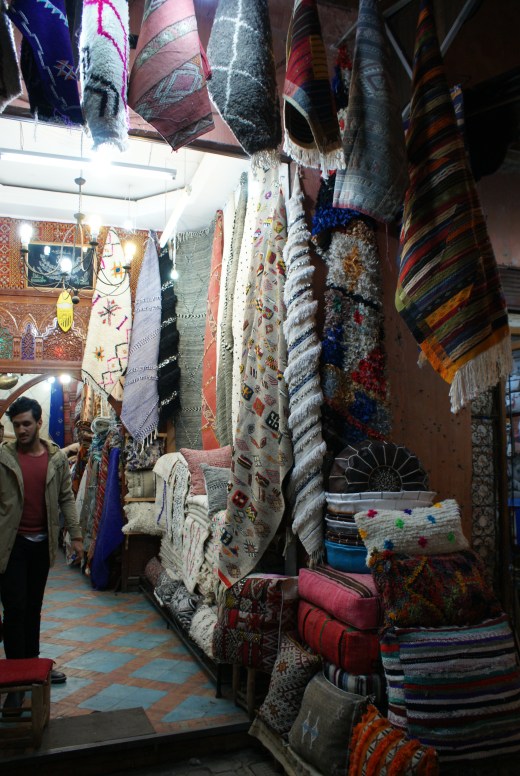
Remember that if you’re about to buy a silk, vintage, hand woven rug and the price is too good to be true – that’s because it probably is. Authentic, high quality rugs are expensive. If you do want to get a Moroccan rug, go ahead – but be realistic. Know that you probably are not going to get a high-quality, hand woven rug for the equivalent of £40. I also found that the pricing of these cheaper rugs (machine made, cotton) was quite similar to Moroccan style rugs available in the UK. The souks weren’t really offering that much of a discount, even after bartering, and this is no doubt because they are such popular tourist attractions.
You can also buy cheaply made rugs imported directly from Moroccan in the UK, where consumer standards dictate that merchants have to be clear on what it is that they’re selling you. It might be prudent of you to purchase them at home instead, just so you know exactly what it is that you’re getting.
Bartering in the souks and where to go for fixed prices
Prices are not fixed in the souks and are of course inflated for tourists. If you struggle with this, take a trip instead to the Complexe d’Artisanat, a huge indoor marketplace with fixed prices, selling all of the usual Moroccan goods and many more. There are also a number of smaller shops dotted around on this street, which were far cheaper than the souks. I bought a traditional tea set from one of these shops, for much less than what I was getting in the souk off Jema el-Fnaa.
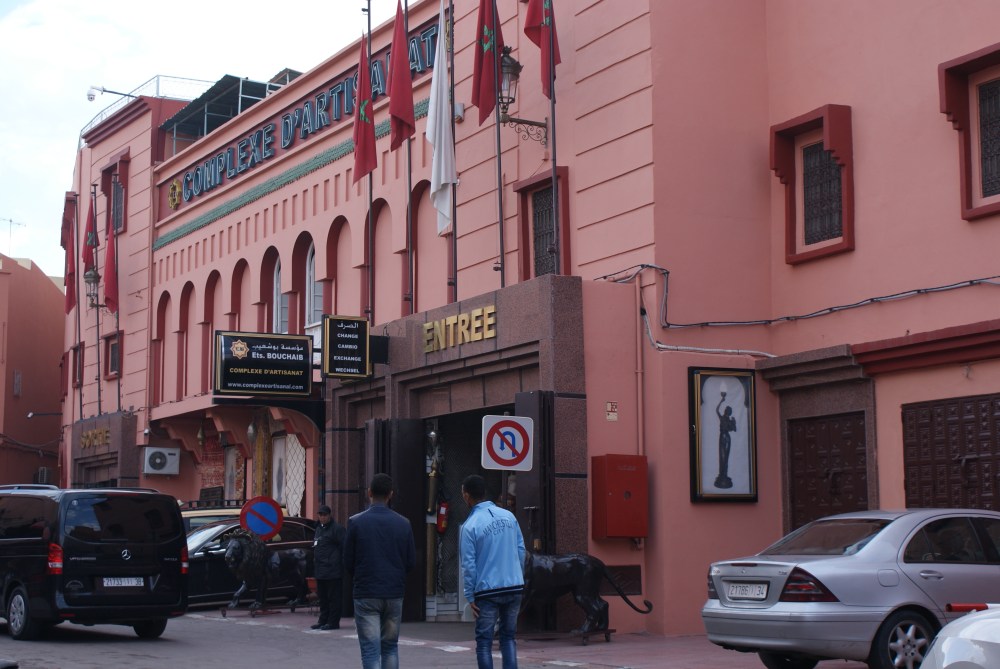
Alternatively, you can also visit the Cooperative Artisanale Femmes De Marrakech, a fairtrade co-op which has fixed prices and sells goods made by local women artisans.
Common scams, tricks and con men in the souks
The souks of Marrakech are infamously difficult to navigate and it is very easy to get lost. My number one tip: use Google maps.
You should be very wary of anyone who comes up to you in the souks to ‘help’ you. There are many gangs that prey on tourists, with one person acting as the friendly face who approaches you to ‘help’ you as you navigate the souk and then proceeds to lead you to shops with whom they are secretly colluding. On the way, there may be other members of the gang that come up to you, and your new ‘friend’ will shoo them away, to gain your trust. These are common scams and I would strongly recommend that you read up on these before you plan your visit.
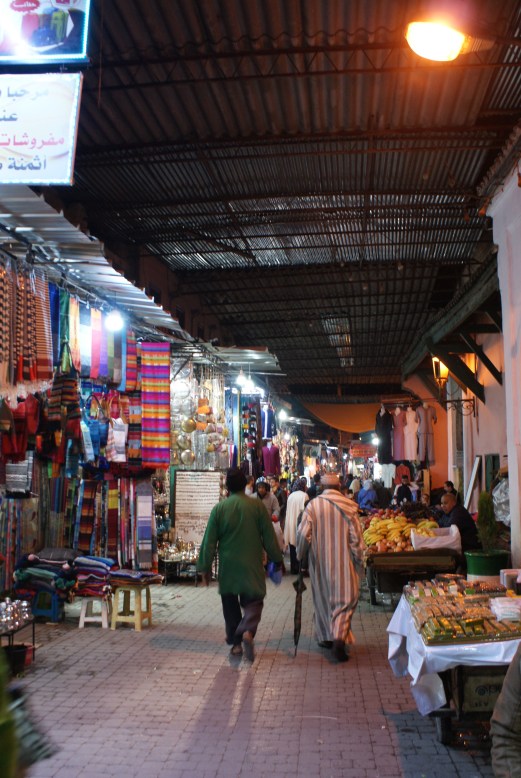
If anyone approaches you to ask if you are lost, I would be very wary of accepting their help. This sounds truly awful and I do not at all mean to generalise and say that all locals are preying on tourists. This is absolutely not the case, but it is better to err on the side of caution. While in the souks, we were approached by a man who was telling us that we were lost and tried to lead us down a side street. We knew we weren’t lost as we were following our route on Google maps, but he was insistent. I’ve heard stories of people who have been ‘guided’ in this way and have ended up mugged. I also know of people offering to help guide you if you are lost and then demanding money, and of an incident where some of my friends – a group of girls –were mugged of their phones while walking through the streets near their riad.
While walking through Jemma el-Fnaa, Marrakech’s main market square, you’ll also find many impromptu showmen – snake charmers, magicians, and the like. They can be quite quick to grab hold of you and once they do, they often expect payment. The best strategy here is to keep walking and avoid them as much as possible. Also stay wary of any card games – you might think that you’re one of many passersby who have stopped to play a game of chance, when in reality those around you are colluding and you’ve been set up in a game that is rigged so that you lose.
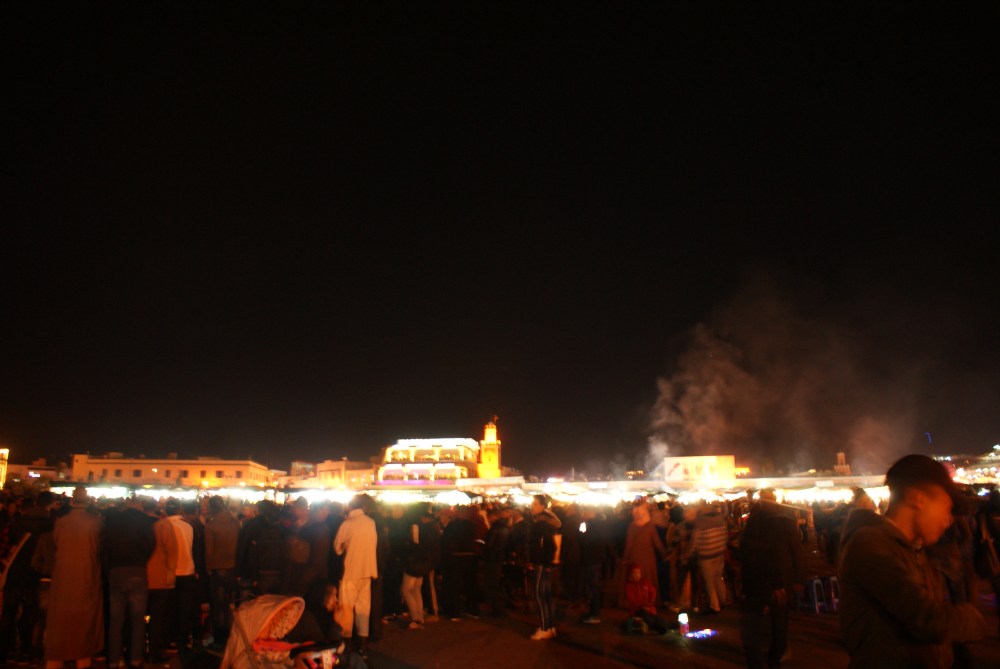
That said, Jema el-Fnaa was a fantastic experience, especially on the weekend when I was amazed at the sheer number of people who were enjoying themselves in the square. There is a wide array of fresh produce on sale and many tea shops with wonderful, open-air balconies overlooking the square. A visit to this square and a stop in one of these tea shops absolutely needs to be on your Marrakech itinerary – just remember to exercise caution and stay alert.
Wait, is everyone in Marrakech trying to scam you? Is Marrakech really unsafe?
No, everyone is not trying to scam you. On one occasion, I was lost and two men offered to help. They were thoroughly helpful and kind and did not ask me for any money.
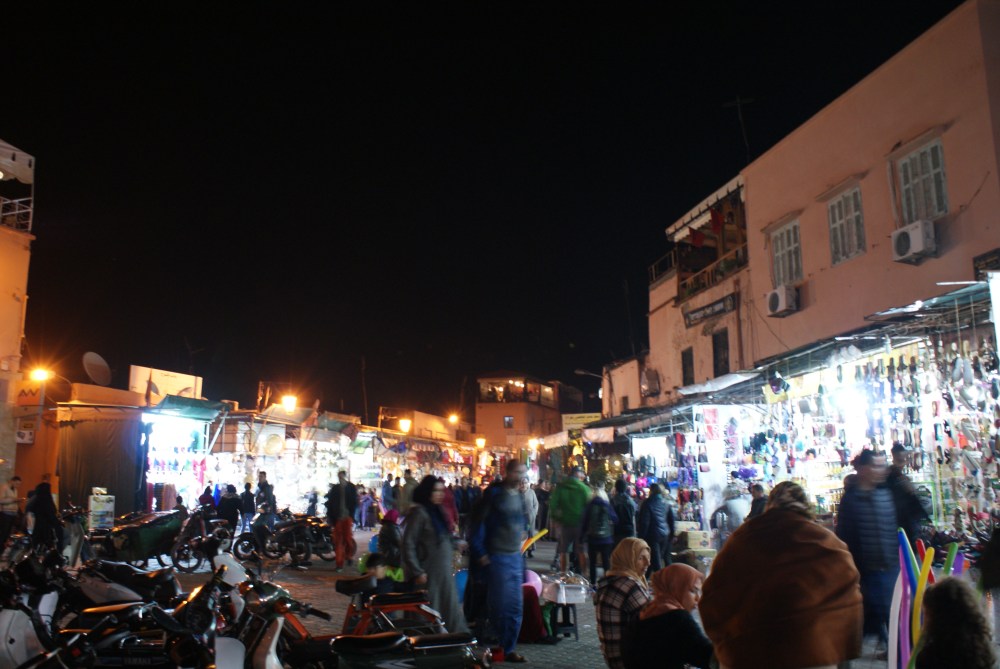
On another occasion, I was walking to a restaurant and following Google maps. An elderly man noticed that I was pausing to find my route and offered to guide me. I was very wary because of what I had read online and refused help, thinking that he might demand payment, but he kept walking alongside me. I kept an eye on Google maps to ensure we were walking the right way and ultimately, I arrived and he didn’t ask for payment. I of course felt terrible to have been so cynical, but I am also glad that I exercised caution.
Marrakech, like many other cities around the world, can be unsafe, so it is wise to be careful and guard your possessions very carefully. If you are a woman traveller, I would be extra careful and would definitely avoid going alone. Unfortunately, harassment is very common and you will be targeted as a tourist.
Should I even visit the souks?
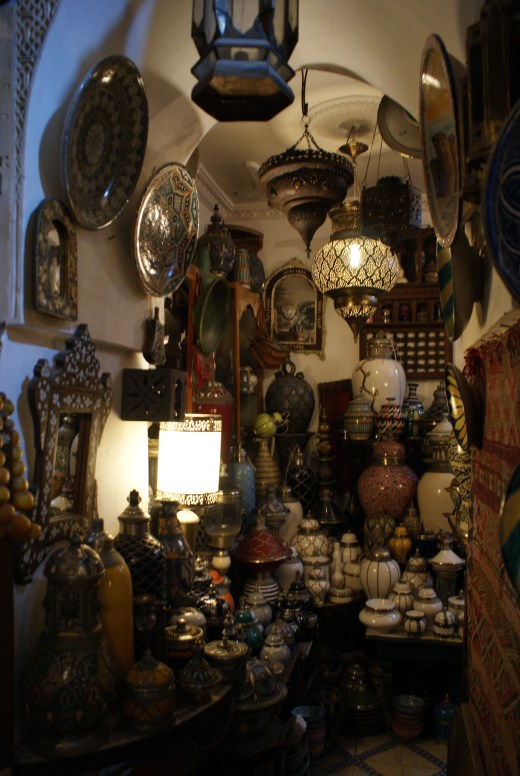
Absolutely. Despite the above, the souks are still a unique experience and there are many beautiful items to be found – naturally, I helped myself to some Moroccan style lamps.
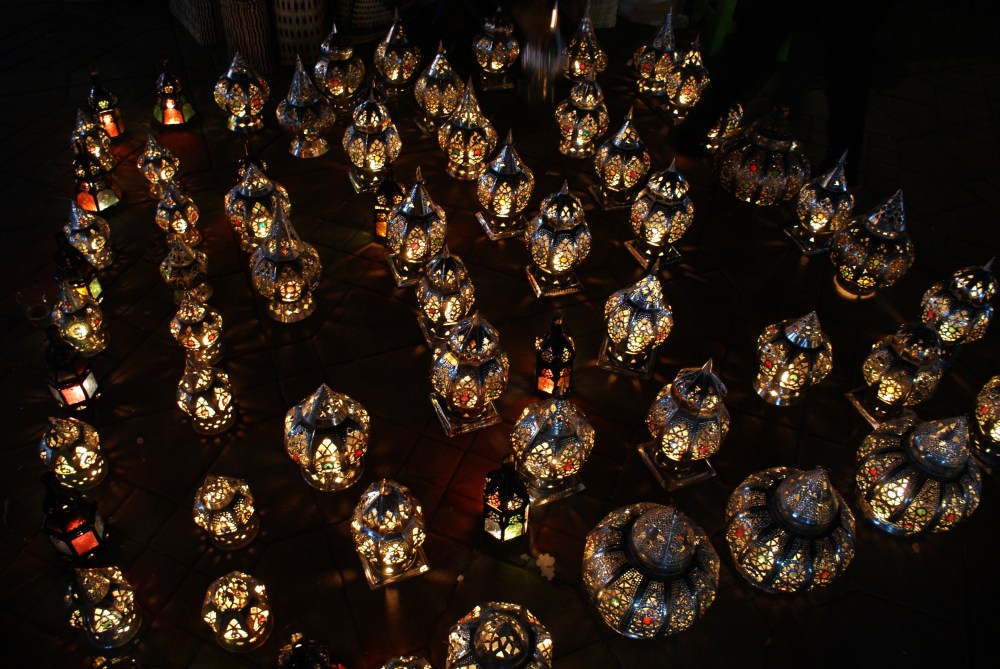
Go for the experience, if not for the shopping, because despite the efforts of some pesky merchants and unsavoury con men, the souks are nonetheless full of charm, character and history.
My final tip if, of course, related to food. Make sure to try some of the delicious nutty halwa on sale – a true Moroccan delight!
 A Travel Narrative